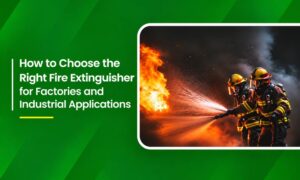
Fire safety is an essential part of every industrial and manufacturing facility. Factories, warehouses, and commercial establishments often contain different materials, machinery, and equipment that may create potential fire hazards. Choosing the right fire extinguisher is therefore important to ensure effective fire protection and workplace safety.
Different types of fires require different extinguishing agents. Using an unsuitable fire extinguisher may not effectively control a fire and can sometimes increase the risk. Understanding fire classifications, extinguisher types, and their applications helps businesses make informed decisions.
In this guide, we will explore how to choose the right fire extinguisher for industrial applications, the different types available, and the important factors to consider when selecting fire extinguisher cylinders.
A) Understanding Different Classes of Fire
Before selecting a fire extinguisher for industrial use, it is important to understand the different classes of fire. Each classification represents a particular type of combustible material and requires a suitable extinguishing agent.
1. Class A Fire
Class A fires involve ordinary combustible materials such as wood, paper, cloth and plastics. Water-based fire extinguishers are commonly used for these fires because they help cool the burning materials and reduce the temperature.
2. Class B Fire
Class B fires involve flammable liquids and gases such as petrol, diesel, oils and paints. Foam, dry powder and CO2 fire extinguishers may be suitable depending on the specific fire hazard.
3. Class C Fire
Class C fires involve electrical equipment and appliances. CO2 and suitable dry powder fire extinguishers are commonly used in these situations because water-based extinguishers can create additional electrical hazards.
4. Class D Fire
Class D fires involve combustible metals such as magnesium, titanium, sodium and potassium. These fires require specially designed extinguishing agents suitable for metal fires.
5. Class F and Class K Fire
These classifications relate to fires involving cooking oils and fats. Wet chemical fire extinguishers are commonly used for such applications.
B) Different Types of Fire Extinguishers for Industrial Applications
Selecting an appropriate fire extinguisher depends on the materials present, potential fire hazards and the requirements of the facility. Some commonly used types include:
1. Water Fire Extinguishers
Water fire extinguishers are primarily used for Class A fires involving materials such as wood, paper, cloth and other ordinary combustibles. They work by reducing the temperature of burning materials.
However, water extinguishers should not be used on electrical fires or fires involving flammable liquids, as they may increase the risk.
2. Foam Fire Extinguishers
Foam fire extinguishers are commonly used for fires involving flammable liquids and ordinary combustible materials. They work by forming a layer of foam over the burning surface, helping suppress the fire.
These extinguishers are useful in certain industrial environments where flammable liquids are present.
3. Dry Powder Fire Extinguishers
Dry powder fire extinguishers are widely used because of their versatility. They are available in different formulations suitable for different fire classifications.
ABC dry powder extinguishers are commonly used for Class A, B and C fires, making them a practical option for various industrial and commercial applications.
4. CO2 (Carbon Dioxide) Fire Extinguishers
CO2 fire extinguishers are particularly suitable for electrical equipment and certain flammable liquid fires. They work by displacing oxygen around the fire and helping suppress combustion.
One of their major advantages is that carbon dioxide does not leave powder or liquid residue, making these extinguishers suitable for areas containing sensitive electrical equipment.
5. Wet Chemical Fire Extinguishers
Wet chemical fire extinguishers are primarily designed for fires involving cooking oils and fats. They work by cooling the burning material and forming a layer that helps prevent the fire from reigniting.
6. Clean Agent Fire Extinguishers
Clean agent fire extinguishers use specialised extinguishing agents that suppress fires without leaving significant residue. They are particularly useful in environments containing sensitive electronic equipment and valuable machinery.
C) How to Choose the Right Fire Extinguisher for Your Factory
Choosing the right fire extinguisher requires considering several factors related to the industrial facility and its potential fire hazards.
1. Identify the Potential Fire Hazards
Start by identifying the materials, machinery and equipment present in your facility. Factories handling combustible materials may require different extinguishers compared to facilities containing electrical equipment or flammable liquids.
2. Select the Appropriate Extinguishing Agent
Once the potential fire hazards are identified, select an extinguisher with an appropriate extinguishing agent. Water, foam, dry powder, CO2 and clean agent extinguishers each have different applications.
3. Consider Fire Extinguisher Capacity
Fire extinguisher capacity is another important consideration. The required capacity depends on the size of the area, potential fire hazards and the level of protection needed.
4. Check Cylinder Quality and Specifications
The quality of a fire extinguisher cylinder plays an important role in its reliability and safe operation. Consider factors such as cylinder material, construction, working pressure and storage capacity when evaluating suitable cylinders.
Rama Cylinders specialises in manufacturing high-strength steel cylinders, with a focus on quality and reliability for various industrial applications.
D) Suitable Fire Extinguishers for Different Industrial Applications
Different industrial environments have different fire protection requirements.
- Manufacturing facilities: ABC dry powder extinguishers may be suitable for areas with multiple types of fire hazards.
- Electrical rooms: CO2 and appropriate clean agent extinguishers are commonly considered for electrical equipment.
- Warehouses: Extinguisher selection depends on the materials being stored, including paper, packaging and other combustible products.
- Areas handling flammable liquids: Foam, dry powder and CO2 extinguishers may be appropriate depending on the specific application.
The final selection should always be based on a proper fire risk assessment and applicable safety requirements.
E) Why Fire Extinguisher Cylinder Quality Matters
A fire extinguisher is only as reliable as its components, including the cylinder that stores the extinguishing agent under pressure. Cylinder construction, material quality and pressure specifications are important considerations when selecting fire safety equipment.
High-strength steel cylinders are widely used in various industrial applications because of their strength and durability. Selecting cylinders manufactured according to the relevant specifications helps support the safe storage and operation of fire extinguishing agents.
Rama Cylinders focuses on manufacturing high-strength steel cylinders for industrial requirements, with an emphasis on quality, performance and reliability.
Protect Your Industry with the Right Fire Extinguisher. Explore Reliable Industrial Fire Safety Solutions with Rama Cylinders for Superior Protection, Safety, and Performance.
Frequently Asked Questions
Q1. Which fire extinguisher is best for industrial use?
Answer: The choice depends on the fire hazards present. ABC dry powder, CO2, foam and other specialised extinguishers are used for different industrial applications.
Q2. What are the most common types of fire extinguishers used in factories?
Answer: Common types include water, foam, dry powder, CO2, wet chemical and clean agent fire extinguishers.
Q3. Is a CO2 fire extinguisher suitable for industrial applications?
Answer: Yes. CO2 fire extinguishers are commonly used in industrial environments, particularly around electrical equipment and certain flammable liquid hazards.
Q4. Why is cylinder quality important in fire extinguishers?
Answer: Cylinder quality is important because it affects the safe storage of pressurised extinguishing agents. Material strength, construction and pressure specifications should be considered.
Choosing the Right Fire Extinguisher for Your Industrial Requirements
Selecting the right fire extinguisher is an important step towards maintaining safety in factories and industrial facilities. Understanding fire classifications, extinguisher types and their applications helps businesses choose suitable fire protection equipment.
Along with selecting the correct extinguishing agent, it is equally important to consider the quality and specifications of the cylinder. Rama Cylinders specialises in high-strength steel cylinder manufacturing, supporting industrial requirements through its focus on quality and reliability.

Amit V. Ramsinghani
Amit V. Ramsinghani serves as the Executive Director of Rama Cylinders, overseeing daily operations since the company's inception in 2005. He holds a Bachelor of Science in Business Administration from Babson College in Boston, USA. Under his leadership, the company has strategically entered new markets, developed superior products, and secured significant global and Indian tenders.