Acetylene, the industrial gas with the highest consumption, has been recognised for its good cutting and welding through conducting and higher flame temperature. Because of its unstable nature, acetylene must be stored in specifically made cylinders that prohibit the gas from decomposing and prevent explosions. Knowing how they are manufactured and how to safely store or use them is very important for the industries that create metal parts, distribute gas, and do workshop operations.
Also, familiarising yourself with its basics and proper acetylene cylinder safety knowledge will protect you from accidents and guarantee you a smooth and uninterrupted operation.
A] What Is Acetylene Gas and Where Is It Used?
Acetylene is a combustible hydrocarbon gas that burns brightly and is widely used in the welding of metals and processing because of its exceptional flame temperature. It bursts into flames instantly and burns powerfully, and these properties are great for making acetylene welding gas. The main applications of acetylene gas are welding, cutting, brazing, chemical synthesis, glass processing, and general metal fabrication. Its flexibility and high heat output have made it the preferred option for workshops, industrial sites, and manufacturing plants. The large scale of gas applications necessitates the implementation of strict handling and safety protocols, which we will discuss below.
Find the Right High-Pressure Cylinder for Your Application
B] Inside an Acetylene Cylinder: Composition and Components
1. Acetylene Cylinder Construction and Materials
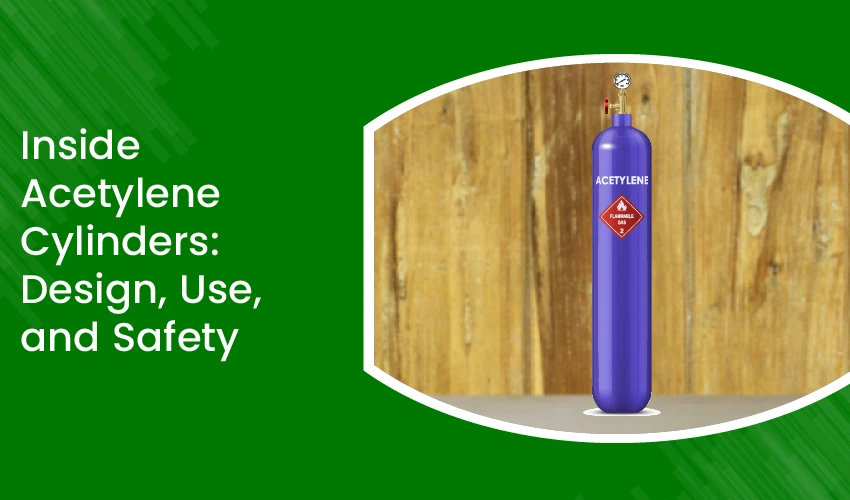
Acetylene is chemically unstable, which makes it a dangerous gas when it is pressurised. To avoid the accretion of the gas and the risk of explosion, the gas is dissolved in acetone and stored in a porous mass. The porous filler, acetone and stabiliser inside the cylinder all take part in this process of reducing the risk of explosion. Knowing these components of the acetylene cylinder becomes crucial in ensuring safe handling of the cylinders.
2. Key Components of Acetylene Cylinders
The typical industrial cylinder incorporates various layers of protection, including:
- Cylinder Shell: A tough steel body that not only supports the internal pressure but also absorbs any impact from outside.
- Porous Mass: A material with sponge-like properties, which welcomes acetone and then distributes acetylene evenly.
- Acetone: This is the solvent that stabilises the gas by dissolving it safely.
- Valves and fusible plugs: These are safety devices which let out the gas to avoid an explosion when the temperature is high.
- Water and Steam Pressure Relief Devices: These are provided for safe venting when an abnormal temperature rise occurs.
All these elements are indispensable for adhering to the safety regulations of acetylene cylinders, preventing the gas from being unstable at any point in time throughout the entire process of transportation, handling, and usage.
3. The Pressure and Capacity of the Acetylene Cylinder
The pressure and capacity ranges of the typical acetylene cylinder depend on its size. But acetylene must never be used at a pressure higher than 15 psi, as this can cause the gas to decompose and react violently. The range of industrial cylinder capacities is quite wide; they can be as big as large workshop cylinders or as small as portable sizes. Knowing these limits is very important for smooth and safe operations.
C] Safe Storage of Acetylene Cylinders
1. How to Store Acetylene Safely?
When working with acetylene, proper storage is the most important thing you can do. The cylinders should always be placed upright, as this would prevent the acetylene from mixing with the acetone that is in liquid form inside. The gases should always be kept in a cool place with good ventilation and also at a fair distance from flames or ignition sources. All these practices together form the basis of safe acetylene storage.
2. Acetylene Gas Storage Guidelines
The following rules and regulations must always be observed, along with the standard ones for the storage of acetylene gas:
- The cylinders should be placed in a designated area for gas storage, which should be dry and well-ventilated.
- They must not be placed anywhere near oxidisers like the oxygen cylinders.
- The protective caps must be installed at all times.
- The cylinders must be securely stored in a way that prevents them from tipping or falling.
3. Acetylene Cylinder Safety Guidelines
The general safety rules consist of:
- No smoking or having fire hazards around cylinders.
- Periodic leak testing using approved solutions.
- Proper labelling for full, empty, or in-use cylinders.
The combination of these simple actions keeps a safe storage area and minimises the risk related to operations.
D] Best Practices for Handling and Maintenance
1. Handling of Acetylene Cylinders
The safe handling of acetylene cylinders starts with the correct and proper movement and lifting. Cylinders have to be rolled on their bottom edge or moved with the help of trolleys but not dragged or dropped. They must be kept upright and secure during transport and avoid being subjected to sharp impacts.
2. Acetylene Cylinder Handling Precautions
The most important acetylene cylinder handling precautions are:
- Never use tools to open valves.
- Open valves slowly in order to prevent sudden pressure surges.
- Do not use cylinders lying down.
- Check for leaks frequently, especially after the cylinder has been in storage or has not been used for a long time.
3. Acetylene Cylinder Maintenance
Periodic acetylene cylinder maintenance not only prolongs cylinder life but also enhances safety. Check for corrosion on valves, make sure fusible plugs are intact, repaint only with approved coatings, and do not contaminate valves or outlets. Any cylinder that is damaged must be reported without delay.
4. Acetylene Cylinder Safety Measures (Do’s & Don’ts)
Do:
- Install flashback arrestors.
- After usage, close valves.
- Place cylinders at a distance from the heat.
Don’t:
- Allow cylinders to come in contact with welding sparks.
- Apply oil or grease near valves.
- DIY repairs.
The combination of these safety measures will not only avoid accidents but also make sure that the daily operations run smoothly and safely.
Find the Right High-Pressure Cylinder for Your Application
Conclusion
Cylinders containing acetylene gas are designed with the utmost care and technical details because of the gas’s unstable characteristics. In the right circumstances, acetylene gas is considered one of the safest and most powerful for cutting, welding, and fabrication work. By following the stringent rules for storing acetylene cylinders and conducting regular maintenance, companies can have a reliable source of gas for a long time. Such safe practices not only shield the workers’ health but also the plant.
Rama Cylinders is the world’s largest manufacturer of NGV cylinders. Our robust range of cylinders, including acetylene cylinders, is globally sold in massive quantities, as they are the epitome of quality and safety. If you are interested in knowing more, contact us now!
FAQs
Organisations performing metal fabrication and manufacturing processes use it mostly for welding, cutting, and brazing, along with other acetylene gas applications.
Acetylene, C₂H₂, is a hydrocarbon with carbon and hydrogen atoms, having very high flammability and the strongest heat output, especially in systems of acetylene welding gas.
High pressure causes the gas to become unstable and may lead to an explosive decomposition or flash ignition; thus, strict safety guidelines for acetylene cylinders are required.
Acetylene cylinders should be stored by following the acetylene gas storage methods, such as vertical storage, cool environments, separation from oxidisers, leak checking, and proper labelling.