Self-Contained Breathing Apparatus (SCBA) cylinders are lifesaving components used by firefighters, industrial workers, and emergency responders operating in hazardous environments. These cylinders store breathable air at extremely high pressures, which makes their structural reliability absolutely critical. Over time, stress, corrosion, and environmental exposure can weaken a cylinder without showing visible damage. SCBA hydrostatic testing is the most reliable method to ensure these cylinders remain safe, compliant, and fit for service.
This guide explains why hydrostatic testing matters, what it involves, applicable standards, testing intervals, and how Rama Cylinder, a trusted SCBA cylinder manufacturer, delivers unmatched safety and reliability.
A] Why Hydrostatic Testing is Critical for SCBA Cylinders
SCBA cylinders typically operate at pressures ranging from 200 to 300 bar or higher. Under these pressures, even a minor structural flaw can result in catastrophic failure. Internal corrosion, moisture ingress, repeated refilling cycles, impact damage, or chemical exposure may slowly degrade the cylinder wall without obvious external signs. Relying solely on visual inspection is not enough.
A hydrostatic test for SCBA cylinders subjects the cylinder to pressures above its normal working limit, revealing weaknesses before they become dangerous. This proactive safety measure prevents failures during emergency use, protects lives, and ensures compliance with global safety regulations. In short, SCBA cylinder hydro test procedures are not optional—they are essential for safe operation.
Looking for high-performance, regulation-compliant SCBA cylinders? Explore how Rama Cylinder delivers safety, durability, and global certification across every product.
B] What Hydrostatic Testing for SCBA Cylinders Includes
1. Visual Inspection and Cylinder Assessment
The testing process begins with a detailed external and internal inspection. Technicians check for dents, cracks, abrasions, bulges, heat damage, chemical exposure, and corrosion. Special attention is given to the neck area and threads, as these are high-stress zones. This stage forms the foundation of self-contained breathing apparatus testing, ensuring only test-worthy cylinders proceed further.
2. Internal Cleaning and Pre-Test Preparation
Before pressurisation, the cylinder is thoroughly cleaned. Any moisture, oil residue, rust, or debris is removed to avoid skewed results. Proper preparation ensures accurate readings during cylinder pressure testing and reduces the risk of false failures.
3. Hydrostatic Pressure Testing Procedure
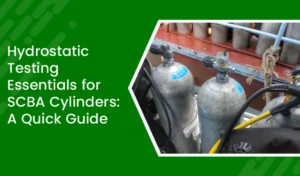
This is the core of SCBA hydrostatic testing. The cylinder is filled completely with water and sealed inside a test jacket. Water is used because it is non-compressible, making the process safer. The cylinder is then pressurised beyond its service pressure. Technicians monitor for leaks, excessive expansion, or signs of instability. This step confirms whether the cylinder can safely withstand operational stresses.
4. Permanent Expansion Measurement
During pressurisation, cylinders expand slightly. After pressure is released, they should return to their original dimensions. If permanent expansion exceeds allowable limits, the cylinder fails. Measuring this expansion is critical to determining ongoing strength and serviceability.
5. Documentation and Certification
Finally, compliant cylinders are stamped or labelled with test dates, and detailed records are issued. Proper documentation ensures traceability, regulatory compliance, and adherence to SCBA tank testing guidelines.
C] SCBA Cylinder Testing Standards & Compliance Guidelines
1. SCBA Cylinder Safety Standards
SCBA cylinders must comply with internationally recognised regulations such as DOT-approved hydrostatic testing, NFPA, ISO, PESO, and other regional standards. These frameworks define acceptable materials, pressure ratings, testing criteria, and service life, ensuring uniform safety across applications.
2. SCBA Tank Testing Guidelines
Guidelines specify approved test equipment, calibrated instruments, qualified technicians, rejection thresholds, and mandatory record-keeping. Importantly, breathing apparatus cylinder testing must only be performed at authorised and certified facilities to maintain validity and safety.
3. Manufacturer-Specific Requirements
Steel, aluminium, and composite SCBA cylinders each have distinct testing and inspection needs. Composite cylinders, for instance, require additional scrutiny due to their layered construction. Rama Cylinder designs and manufactures SCBA cylinders in line with global safety benchmarks, ensuring compatibility with all major testing standards and long-term reliability.
D] Hydrostatic Test Intervals for SCBA Cylinders
1. Standard Testing Intervals
Most aluminium and steel SCBA cylinders require hydrostatic testing every five years, while certain composite cylinders may require testing every three years. These hydro test intervals for SCBA are defined by cylinder type and governing regulations.
2. Service Life Limitations
Composite SCBA cylinders usually have a fixed service life, often 15 years from the date of manufacture. Even if a cylinder passes testing, it must be retired once it reaches its end-of-life limit. This rule prevents material fatigue-related failures.
3. When to Test Earlier Than Scheduled
Early testing is required after fire exposure, heavy impact, chemical contamination, valve damage, or visible deformation. Prompt SCBA cylinder inspection in these cases ensures continued safety.
F] The Rama Cylinder Advantage for SCBA Cylinders
As a global leader in high-pressure cylinder manufacturing, Rama Cylinder combines advanced engineering, strict quality control, and compliance with international standards. From design to testing support, Rama Cylinders prioritise durability, safety, and long service life. Their SCBA cylinders are trusted worldwide by firefighting and industrial safety professionals. Explore more from NGV Cylinders Manufacturer, learn more about us, or contact us directly to discuss your SCBA requirements.
Looking for high-performance, regulation-compliant SCBA cylinders? Explore how Rama Cylinder delivers safety, durability, and global certification across every product.
Conclusion
Hydrostatic testing is the backbone of SCBA cylinder safety. It identifies hidden weaknesses, ensures regulatory compliance, and protects users operating in life-threatening conditions. By understanding how to test SCBA cylinders, adhering to correct intervals, and choosing a reliable SCBA cylinder manufacturer like Rama Cylinder, organisations can significantly reduce risk while extending equipment life. Consistent testing, proper handling, and manufacturer-backed quality together ensure that SCBA cylinders perform flawlessly when lives depend on them.
FAQs
It is a pressure-based test that checks structural integrity by measuring expansion under high pressure.
Typically, every 3–5 years, depending on the material and regulations.
It detects hidden damage and prevents dangerous failures during use.
The cylinder is condemned and permanently removed from service.
Impact damage, fire exposure, corrosion, or chemical contamination.
Follow proper SCBA maintenance tips, avoid harsh environments, and test on schedule.
Steel and aluminium cylinders may last decades; composite cylinders usually have a 15-year limit.
The principle is the same, but acceptance criteria and service life differ.
Only certified facilities and trained technicians approved by regulatory bodies.