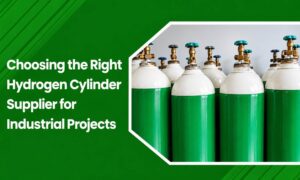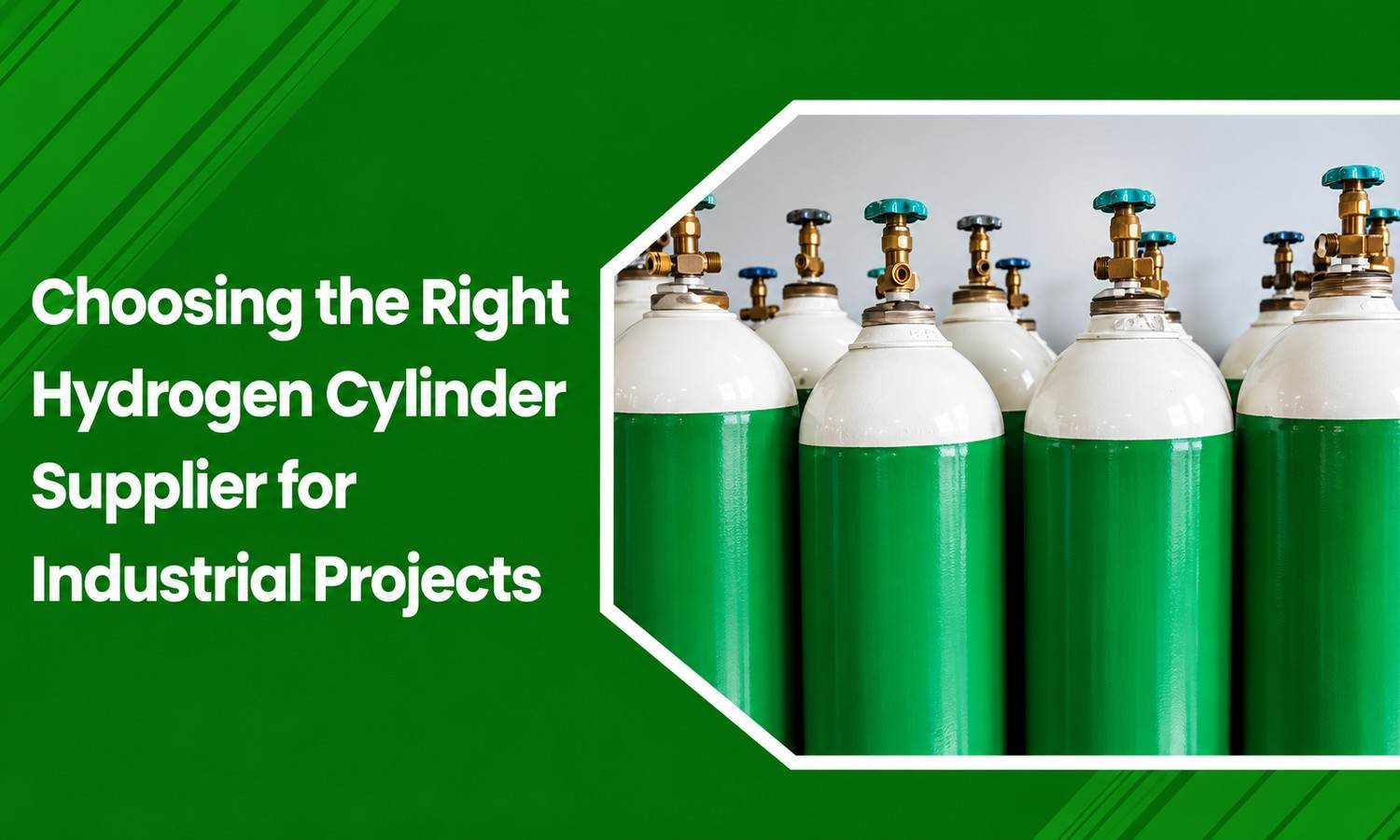
Choosing the right hydrogen cylinder supplier is an important decision for any industrial project involving hydrogen storage and handling. The supplier you select should offer cylinders that match your required pressure, capacity, dimensions, and application while maintaining consistent manufacturing and testing practices. For procurement teams, comparing specifications and supplier capabilities before placing an order can help avoid costly mismatches later.
What Should You Look for in a Hydrogen Cylinder Supplier?
A reliable hydrogen cylinder supplier should be evaluated on more than price. Industrial buyers should look at the manufacturer’s cylinder range, manufacturing capability, testing process, available specifications, and ability to meet project requirements.
Before finalising a supplier, consider:
- Required working and test pressure
- Water and gas capacity
- Cylinder dimensions and tare weight
- Manufacturing and inspection requirements
- Documentation, quantity and delivery requirements
It is also useful to discuss the intended application with the manufacturer. The right cylinder configuration depends on how the cylinders will be stored, transported and used.
Check Hydrogen Cylinder Specifications Before You Buy
Cylinder specifications directly affect how a product fits into an industrial hydrogen application. Rama Cylinders’ Hydrogen Cylinders Size Chart provides different configurations covering pressure, capacity, diameter, length and tare weight.
For example, the listed 50 L, 75 L, 80 L and 100 L cylinders have approximate gas capacities of 15.5, 23.5, 25.0 and 31.0 cu.m., respectively. The listed cylinders have an approximate diameter of 267 mm, with length and weight varying according to capacity.
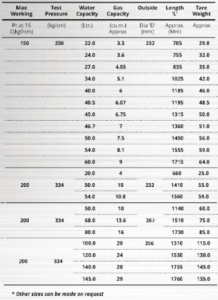
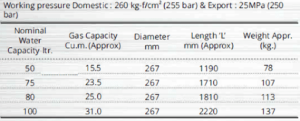
Rama Cylinders Hydrogen Cylinders Size Chart showing pressure, capacity, dimensions and tare weight.
The chart also includes configurations with maximum working pressures of 150 kgf/cm² and 200 kgf/cm², along with corresponding test pressures and different water and gas capacities. Other sizes can also be made on request, as indicated in the product chart.
For an industrial project, these figures should be compared with the actual application and handling requirements before selecting a configuration.
Why Manufacturing Quality and Testing Matter
Hydrogen applications require careful attention to cylinder specifications, manufacturing quality and testing. Buyers should understand the applicable pressure requirements and ask for relevant product and testing documentation before procurement.
For larger orders, buyers should confirm that the supplier can maintain consistent specifications across the required quantity and provide the relevant inspection and test documentation. For project buyers, this matters when multiple cylinders need to meet the same specified requirements.
Rather than choosing a cylinder based only on capacity, procurement teams should consider the complete specification and confirm the configuration with the manufacturer.
Why Choose Rama Cylinders as Your Hydrogen Cylinder Supplier?
Rama Cylinders manufactures high-pressure seamless steel gas cylinders for industrial gas applications and offers hydrogen cylinders in multiple configurations. Its product range and size chart allow industrial buyers to review parameters such as water capacity, gas capacity, pressure, dimensions, and tare weight.
For businesses sourcing cylinders for a hydrogen project, the practical approach is to share the required pressure, capacity, quantity, and application with the manufacturer. Rama Cylinders can discuss the required cylinder configuration and customization options based on the project’s specifications.
Get the Right Hydrogen Gas Cylinder for Your Business
Questions to Ask Before Selecting a Hydrogen Cylinder Supplier
- What working and test pressure does the project require?
- Which water and gas capacity is suitable for the application?
- What cylinder dimensions and tare weight are acceptable?
- Can the supplier provide the required quantity and documentation?
The answers can help procurement teams compare suppliers based on actual project requirements instead of relying on price alone.
Choose a Supplier Based on Your Project Requirements
The right hydrogen cylinder supplier should be able to discuss the technical requirements of your project and provide a suitable cylinder configuration. Pressure, capacity, dimensions, testing and supply requirements all deserve consideration before an order is placed.
Rama Cylinders’ hydrogen cylinder range and size chart provide a useful starting point for industrial buyers comparing available configurations.
Partner with a Trusted Hydrogen Cylinder Manufacturer
FAQs
Q1. What should I look for in a hydrogen cylinder supplier?
Answer: Look for a supplier that can provide the required cylinder pressure, capacity, dimensions, and quantity, along with appropriate manufacturing and testing documentation. The supplier should also be able to understand and discuss your project’s specific requirements.
Q2. What specifications should I check before buying hydrogen cylinders?
Answer: Key specifications include working pressure, test pressure, water capacity, approximate gas capacity, diameter, length and tare weight, material/specification and the applicable standard or certification. These should be matched with the intended application, handling conditions, and project requirements.
Q3. Does Rama Cylinders offer different hydrogen cylinder sizes?
Answer: Yes. The Rama Cylinders Hydrogen Cylinders Size Chart shows multiple pressure and capacity configurations, including 50 L to 100 L nominal water capacities in the listed range. Other sizes can be made on request.

Amit V. Ramsinghani
Amit V. Ramsinghani serves as the Executive Director of Rama Cylinders, overseeing daily operations since the company's inception in 2005. He holds a Bachelor of Science in Business Administration from Babson College in Boston, USA. Under his leadership, the company has strategically entered new markets, developed superior products, and secured significant global and Indian tenders.