India’s transportation sector is seeing a steady shift toward cleaner fuel options, with CNG becoming an important choice across passenger vehicles, commercial transportation, and fleet operations. As this transition continues, the conversation is moving beyond fuel availability toward the equipment required to store and use CNG effectively.
CNG cylinders are an important part of this equation. They provide the high-pressure storage required for compressed natural gas in vehicle applications, which means their capacity, dimensions, working pressure, and configuration need to match the intended use.
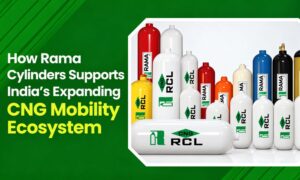
This is where Rama Cylinders fits into India’s expanding CNG mobility ecosystem, with its range of on board CNG cylinders designed in multiple configurations.
India’s CNG Mobility Ecosystem Is Becoming More Diverse
CNG mobility is no longer limited to a single type of vehicle or user. Passenger transportation, commercial fleets, logistics and other transportation applications can have different requirements for onboard gas storage.
A private vehicle and a commercial fleet, for example, may have very different space limitations and operating requirements. The cylinder configuration therefore becomes an important consideration during vehicle integration and procurement.
For businesses sourcing CNG cylinders, the question is not simply about finding a cylinder with a particular capacity. It is about identifying a configuration that fits the application’s storage requirement, available space, pressure requirement, and technical specifications.
This makes the cylinder manufacturer an important part of the wider CNG supply chain.
Why On Board CNG Cylinders Matter
CNG is stored under high pressure, making the cylinder a critical component of an onboard CNG system. The available storage volume needs to be considered alongside the physical dimensions of the cylinder and the space available for installation.
For vehicle manufacturers, fleet operators and other buyers, this creates several practical considerations:
- Required CNG storage capacity
- Working pressure
- Cylinder diameter and length
- Approximate cylinder weight
- Available installation space
These factors need to be considered together rather than in isolation.
A cylinder with greater capacity, for instance, may also have different dimensional and weight characteristics. The appropriate choice therefore depends on the specific vehicle or application rather than a single universal configuration.
Rama Cylinders’ On Board CNG Range
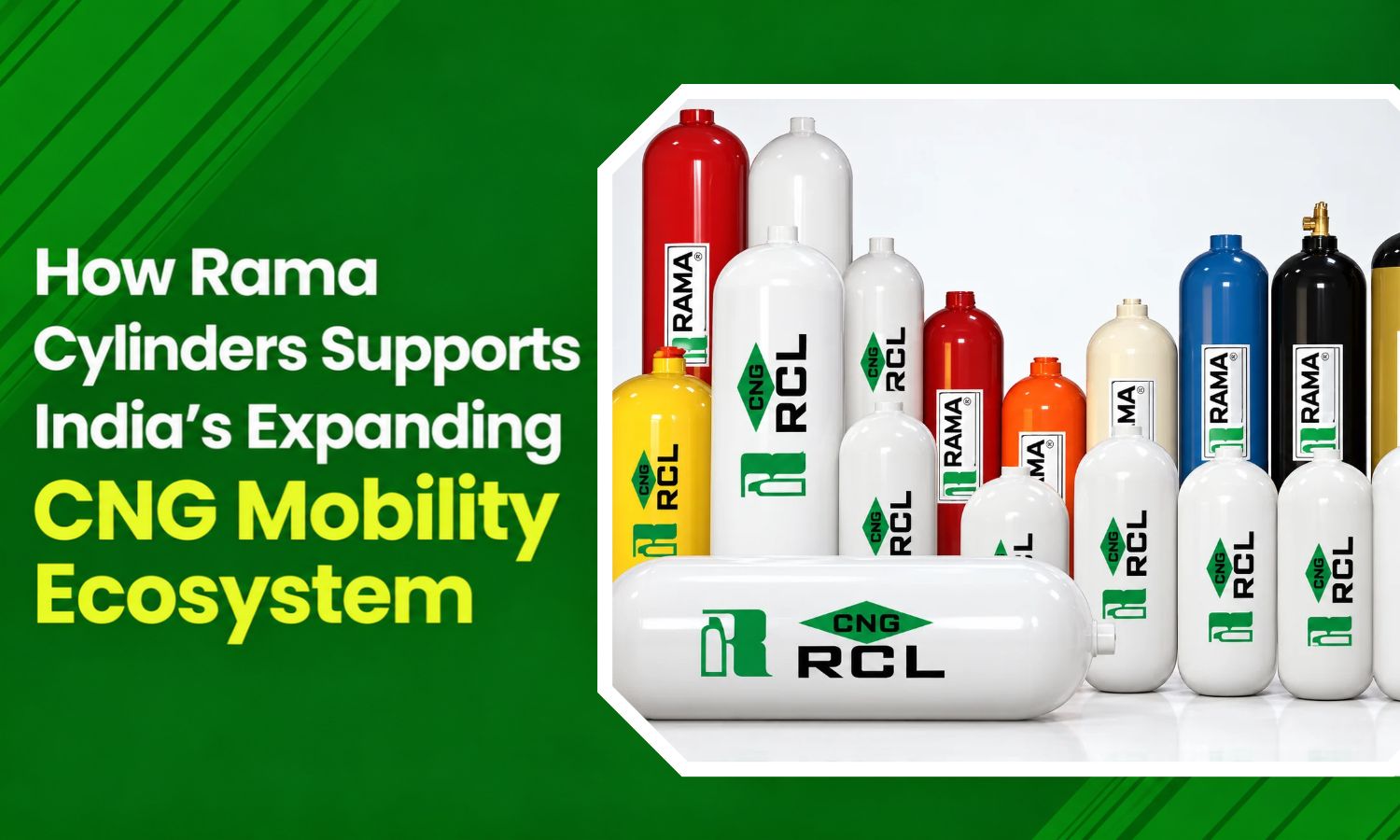
Rama Cylinders provides On Board CNG cylinders in multiple configurations, giving buyers different options when evaluating their CNG storage requirements.
The supplied product specifications list a working pressure of 200 Bar. Across the listed configurations, nominal water capacity ranges from approximately 4.8 litres to 200 litres, while approximate gas capacity ranges from 0.9 m³ to 50 m³.
The range also includes different cylinder diameters and lengths. Listed diameters include 139.7 mm, 232 mm, 267 mm, 317 mm, 356 mm and 406 mm, with approximate lengths ranging from 455 mm to 1,845 mm, depending on configuration.
| On Board CNG specification | Listed range |
| Working pressure | 200 Bar |
| Nominal water capacity | Approx. 4.8–200 L |
| Gas capacity | Approx. 0.9–50 m³ |
| Diameter | Approx. 139.7–406 mm |
| Approx. length | 455–1,845 mm |
| Approx. weight | 8.6–185 kg |
These figures represent the configurations listed in the Rama Cylinders On Board CNG size chart. Other sizes can be made on request, according to the supplied product information.
For buyers, having access to different configurations can make it easier to assess cylinder requirements against the physical and operational needs of a particular CNG application.
Where CNG Cylinders Fit Into Transportation
The role of CNG cylinders becomes clearer when looking at the complete mobility chain.
CNG needs to be stored onboard a vehicle before it can be supplied to the vehicle’s fuel system. The cylinder therefore connects the fuel itself with the vehicle’s practical storage requirements.
This matters particularly for commercial vehicles and fleet applications, where vehicle utilisation, available space and operating requirements can differ from one application to another.
For a fleet operator, cylinder selection can become part of a wider procurement decision involving vehicle configuration, storage requirements and long-term operational needs.
For manufacturers and businesses sourcing cylinders, understanding these requirements before placing an order can help avoid selecting a configuration based solely on one specification.
Selecting a CNG Cylinder: What Should Buyers Examine?
A CNG cylinder should be evaluated against its intended application rather than treated as a standard, one-size-fits-all component.
Buyers can begin by defining the required gas storage capacity and available installation space. From there, cylinder diameter, length, approximate weight and working pressure can be compared against the application’s technical requirements.
It is also important to review the applicable technical documentation, standards and installation requirements for the intended system.
For procurement teams searching for a CNG cylinder manufacturer in India, this specification-led approach can be more useful than simply comparing suppliers on price.
The right supplier conversation should begin with the actual requirement.
How Rama Cylinders Supports CNG Mobility Requirements
Rama Cylinders’ role in the CNG mobility ecosystem is centred on the manufacture and supply of gas cylinders for relevant applications, including On Board CNG.
Its listed On Board CNG configurations cover a broad range of capacities and physical dimensions. This gives buyers a product range to evaluate when their vehicle or application has specific storage and packaging requirements.
The company’s wider product portfolio also includes cylinders and solutions for other gas applications, demonstrating that its manufacturing focus extends beyond a single CNG configuration.
For CNG mobility buyers, the practical value lies in being able to discuss the requirement with a cylinder supplier and identify the specifications that correspond with the intended application.
CNG Mobility Needs More Than Fuel Availability
The expansion of CNG mobility depends on an ecosystem of connected components and services. Fuel infrastructure is one part of that ecosystem; vehicle systems, storage equipment and cylinder supply are other parts.
As CNG adoption develops across different transportation applications, cylinder requirements can become increasingly application-specific.
That is why CNG cylinder capacity, dimensions, working pressure and configuration deserve attention during procurement.
Rama Cylinders’ On Board CNG range provides multiple listed configurations at a 200 Bar working pressure, allowing buyers to assess different cylinder specifications according to their requirements.
For organisations planning a CNG vehicle, fleet or related application, the next step is to establish the required specifications and discuss them with a suitable cylinder supplier.
Looking for a Supplier to Fulfil Your CNG Cylinder Needs?
Whether you are evaluating CNG cylinders for a vehicle application, commercial fleet or another CNG requirement, Rama Cylinders can help you explore its available On Board CNG configurations.
The product range includes different capacities, diameters and lengths, with other sizes available on request as stated in the product specifications.
Looking for a supplier to fulfill your CNG Cylinder needs?
You can also explore the On Board CNG section on the Rama Cylinders website for detailed product specifications.
FAQs
Q1. Which CNG cylinder specifications should buyers check before ordering?
Answer: Start with the intended application and review the required gas capacity, nominal water capacity, working pressure, diameter, length and approximate weight. Installation requirements and applicable technical specifications should also be confirmed before selecting a configuration.
Q2. Does Rama Cylinders offer different sizes of On Board CNG cylinders?
Answer: Yes. The supplied Rama Cylinders size chart lists multiple configurations covering different capacities, diameters, lengths and approximate weights. The product information also states that other sizes can be made on request.
Q3. What does 200 Bar working pressure mean for an On Board CNG cylinder?
Answer: The Rama Cylinders On Board CNG specification is listed with a 200 Bar working pressure. Buyers should ensure that the selected cylinder and the complete CNG system meet the applicable requirements for their particular application.
Q4. How should fleet operators approach CNG cylinder selection?
Answer: Fleet operators should first define their vehicle and operating requirements, then assess storage capacity, installation space, cylinder dimensions, weight and applicable technical requirements. Supplier discussions should be based on these application-specific parameters.
Q5. Are CNG cylinders available in different diameters and lengths?
Answer: The Rama Cylinders On Board CNG chart lists multiple diameters and lengths across its configurations. This allows buyers to review different physical options when assessing their available installation space and storage requirements.

Amit V. Ramsinghani
Amit V. Ramsinghani serves as the Executive Director of Rama Cylinders, overseeing daily operations since the company's inception in 2005. He holds a Bachelor of Science in Business Administration from Babson College in Boston, USA. Under his leadership, the company has strategically entered new markets, developed superior products, and secured significant global and Indian tenders.