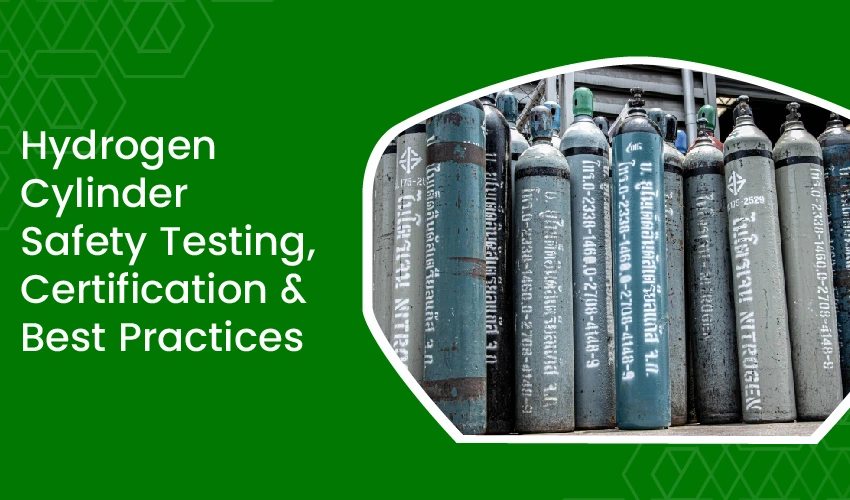
Hydrogen gas is a highly flammable, which requires a robust container that can handle its lethal characteristics safely. To fulfil the requirement, hydrogen cylinders are made. Due to the sensitivity of hydrogen gas, a cylinder requires a safety plan that maintains the safety, integrity, and longevity of the hydrogen cylinders. In this detailed blog post, we will explore the hydrogen cylinder safety plan. Keep reading!
A] Why Hydrogen Cylinder Safety is Critical
Hydrogen gas has a highly diffusible nature, which makes it a highly flammable gas, leading to fire accidents if not stored in a robust container. Moreover, it requires low ignition energy, which means even a tiny spark can lead to a massive explosion. Additionally, it lacks both taste and colour, which makes hydrogen gas harder to detect without specialised equipment. Therefore, hydrogen gas must be stored and transported in properly tested, leakproof, and reinforced cylinders to mitigate any complications ahead.
Looking for reliable, nationally and internationally tested hydrogen cylinders at cost-effective rates?
B] Hydrogen Cylinder Testing & Inspection
1. Types of Hydrogen Cylinder Testing
There are two methods to test hydrogen cylinders: destructive and non-destructive testing. Ensuring each hydrogen cylinder undergoes these tests makes it very safe for hydrogen gas storage and transport.
Destructive Testing
Destructive testing for hydrogen cylinders involves hydrostatic and burst testing. These methods test the highest pressure-withstanding capacity of the cylinder by filling it with water and applying extreme pressure on the cylinder until it fails. Destructive tests are usually conducted initially (at the time of prototype development).
Non-Destructive Testing
Non-destructive testing for hydrogen cylinders involves ultrasonic, radiographic, eddy current, and visual testing. These tests are conducted to identify visual and non-visual imperfections of the cylinder, including cracks, leaks, corrosion, and voids. The non-destructive tests should be conducted every five years for stationary cylinders and more frequently for mobile cylinders.
2. Hydrogen Cylinder Inspection Process
The hydrogen cylinder inspection process requires visual testing, valve inspection, and hydrostatic testing to ensure hydrogen cylinder safety and integrity.
In the preparation phase, cylinders are identified and registered for inspection by removing them from service. Then, the cylinders are safely emptied, and accessories are disintegrated for thorough cleaning.
In the testing phase, the outer and inner surfaces of the cylinder are initially checked through visual inspection. If required, the cylinder undergoes NDT (non-destructive testing), like UT, RT, and eddy current testing. Finally, the cylinder is checked for pressure, in which the cylinder is pressurised through liquid beyond the working pressure range.
In the maintenance phase, minor defects are repaired, while major defects result in cylinder abandonment.
3. Certification Requirements
Upon testing, the certified testing agency provides certificates to the cylinders that have passed all destructive and non-destructive testing procedures. Each cylinder is mandated to be marked with the retesting date. The hydrogen cylinder certification is provided by the authorised agencies validated by the Petroleum and Explosives Safety Organisation (PESO).
C] Hydrogen Cylinder Standards
1. International and National Standards
There are several national and international standards, like EN, ISO, IS series, and ASME, which ensure the safety and integrity of hydrogen cylinders. They directly address the critical risks associated with hydrogen cylinders, like explosions and leaks. These standards ensure that the hydrogen gas cylinder manufacturers and users adhere to the legal and safety compliance requirements stated.
2. Manufacturer and User Responsibilities
Manufacturers must follow design, testing, and labelling standards, while users must follow storage, handling, and inspection standards to ensure the cylinder’s safety.
D] Best Practices for Safe Hydrogen Cylinder Use
1. Handling and Storage
Every hydrogen cylinder should be stored and handled in accordance with the standards. The standards state that the cylinders must be positioned upright and in well-ventilated areas away from potential ignition sources. The standards also mandate wearing a PPE suit and using non-sparking tools when handling cylinders.
2. Routine Checks and Maintenance
Routine checks should involve visual checks and weekly cleaning of specific components, like booster tanks, valves, and hoses. Moreover, gaskets, check valves, and hoses should be replaced every six months or a year. Following the manufacturer’s guidelines also facilitates routine checks.
3. Emergency Preparedness
Emergency preparedness requires a well-rehearsed emergency plan under the supervision of trained personnel. Hydrogen cylinder safety practices also involve safety drills, leak detection training, and emergency shutdown procedures. Moreover, install an emergency shutoff valve for extinguishing hydrogen fire, if any, to cut off the gas supply.
Looking for reliable, nationally and internationally tested hydrogen cylinders at cost-effective rates?
Conclusion
We cannot deny the sensitivity that the hydrogen gas cylinders carry and the extra care they demand. The guidelines and standards issued for these sensitive cylinders provide an extra safety layer to ensure businesses and people around stay safe.
If you are looking for high-quality hydrogen gas cylinders at an affordable rate, choose Rama Cylinders, the world’s largest CNG cylinder manufacturer in India. Each hydrogen cylinder manufactured by us is tested thoroughly until it meets every mandated national and international standard and quality check. Contact us now!
FAQs
Hydrogen cylinders are specialised containers used to store and transport hydrogen gas. They are used in a range of fuel cell vehicles, hydrogen refuelling stations, and industrial processes.
Hydrogen cylinders are designed with a multi-layered design, where high-strength steel is wrapped to provide the required reinforcement. Together, the inner and outer layers provide an added layer of safety.
There are various types of hydrogen cylinders sold globally. Among them, the Type I hydrogen cylinder is the most sold and safest cylinder due to its all-metal design.
Hydrogen cylinder testing is highly important, as hydrogen is a highly flammable gas and has high diffusibility, meaning it requires a tiny spark to create a lethal explosion. To mitigate these potential explosive scenarios, hydrogen cylinder testing is important.
Testing methods for hydrogen cylinders include destructive and non-destructive testing, like visual testing, UT, RT, hydrostatic testing, and leak testing.

Amit V. Ramsinghani
Amit V. Ramsinghani serves as the Executive Director of Rama Cylinders, overseeing daily operations since the company's inception in 2005. He holds a Bachelor of Science in Business Administration from Babson College in Boston, USA. Under his leadership, the company has strategically entered new markets, developed superior products, and secured significant global and Indian tenders.