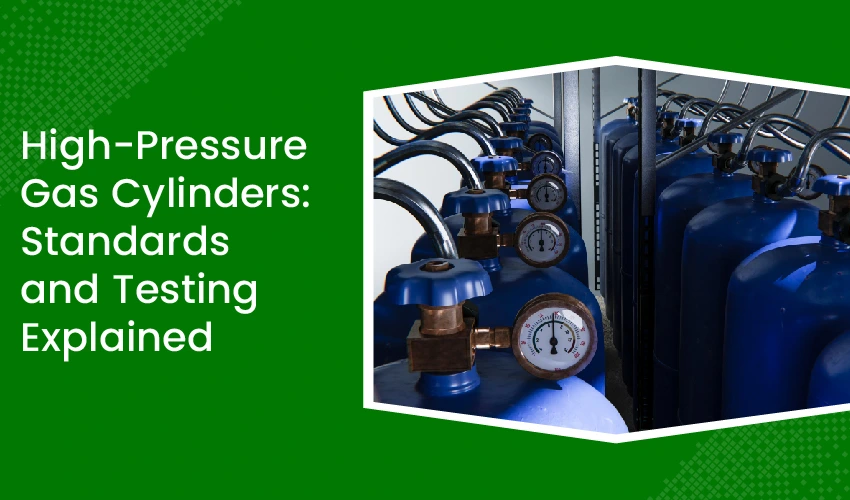
Gas cylinders containing high-pressure gas may appear to be simple on the surface, but they are designed to resist extreme forces, which cannot be resisted by ordinary containers, like low-pressure cylinders. The pressure in these cylinders is enormous, and so is the responsibility that is associated with it. Every safe cylinder is surrounded by a summation of intelligent material selection, high-quality global standards and tough testing that does not leave anything to chance.
In this guide, we will break down the design, certification, and testing of high-pressure cylinders to help you design, use, and maintain them effectively.
A] Understanding High-Pressure Gas Cylinders
A high-pressure gas storage cylinder differs from the others, as it contains gases at high pressures, usually more than 150 bar. They are made up of strong metals or composites and have precise valves for controlled releases. They are generally used for oxygen, nitrogen, hydrogen, CNG, speciality gases, and several industrial tasks. Their design should be safe, durable, and compliant with regulations over a long period. When selecting or using these cylinders, focus on two main safety ideas: the materials that provide the container its strength and the safety standards that govern the design, testing, and use.
Find the Right High-Pressure Cylinder for Your Application
B] Key Design Requirements for High-Pressure Cylinders
1. Cylinder Materials and Build
High-pressure cylinders can be made from steel, aluminium, or advanced composites. They affect the cylinder’s pressure rating, its resistance to corrosion, and its weight. Composite cylinders are strong yet light in weight; steel is very durable and comparatively safe.
2. Safety and Pressure Capacity
For engineers to maintain safety in the cylinder, they consider wall thickness, tensile strength, fatigue life, and burst pressure. All these factors enable the cylinder to sustain continuous pressurisation and repeated cycles of filling.
3. Storage and Utilisation of High-Pressure Gas
Designs in the valve, neck threads, inner coatings, and outer finish affect performance. Safety components, such as PRDs (pressure relief devices), are critical to prevent over-pressurisation in case of emergencies.
C] Gas Cylinder Safety Standards: DOT vs ISO
1. DOT Cylinder Standards (U.S.)
DOT regulations encompass the type of materials used, the actual construction of the cylinders, labelling, testing, and even transport. These regulations serve to keep cylinders safe for industries where the cylinders’ mobility and handling are a matter of importance. The importance of DOT regulations is mostly in the medical, industrial, and storage of high-pressure gases.
2. ISO Cylinder Standards (International)
ISO standards provide internationally recognised specifications that help in the manufacture and marketing of cylinders globally. They define criteria on design, testing, and performance. The choice of an ISO-certified cylinder is a preference for many organisations when working across borders or aiming for global consistency.
3. Why These Standards Matter
Following safety standards for gas cylinders helps in keeping people safe, ensures that cylinders work dependably, and obtains regulatory approval. Manufacturers who follow DOT and ISO gas cylinder standards show their caring attitude towards long-term performance and safe operation within many industries.
D] High-Pressure Cylinder Testing Requirements
1. Hydrostatic Testing
Pressure testing is the most common method of testing high-pressure cylinders. In this method, the technician fills the cylinder with water and then applies pressure over and above the normal limit to check how it expands and remains strong. These tests are mandated by both DOT and ISO at intervals as a means of keeping cylinders in use.
2. Non-Destructive Testing (NDT)
Non-destructive testing includes ultrasonic, eddy current, and visual inspections that find flaws without damaging the cylinder. NDT helps keep high-pressure gas cylinders safe during their life.
3. Burst Tests and Fatigue Tests
These tests are destructive and are done during product development and certification, not during normal use. They show that cylinders can handle pressures well beyond normal use and prove they stay strong under extreme conditions.
4. Requalification and Recertification
Cylinders are required to be retested periodically by the rules. Requalification examines, among other things, structural strength, valve performance, and safety issues. This helps to avoid accidents by keeping supplies of high-pressure gases safe.
E] Best Practices for High-Pressure Gas Cylinder Safety
1. Proper Handling and Storage
Store cylinders upright, secured, and away from ignition sources. Keep areas around valves clean, protect cylinders from heat, and avoid impact.
2. Regular Inspection
Regular checks involve label checking, leak checks, inspection for dents and corrosion of any sort, the proper working of valves, and others. Inspections sharply improve safety.
3. Using Certified Cylinders Only
Choose cylinders manufactured to DOT and ISO gas cylinder specifications. Certified cylinders ensure consistency in quality, safety in performance, and regulatory acceptance for the various industries.
4. Training and Documentation
Operators should be suitably trained, know the intervals of periodic testing, and maintain records for auditing and safety. Good record-keeping is essential for safe testing and handling of high-pressure cylinders.
Find the Right High-Pressure Cylinder for Your Application
Conclusion
High-pressure gas cylinders are designed to store gases at high pressures by applying safety principles throughout. Their reliability depends entirely on good material, sound engineering, and strict adherence to the safety standards for gas cylinders. Their safe operation, no matter what industry they may be used in, requires periodic testing, proper storage, and trained handlers.
Ensuring dependable performance and safety in all applications of high-pressure storage is possible by understanding the fundamentals of materials, design criteria, test methods, and regulations.
Rama Cylinders is the world’s largest manufacturer of NGV cylinders. We are sought-after for economical and nationally and internationally certified high-pressure cylinders. Contact us today for your high-pressure cylinder requirements.
FAQs
Uses include industrial gases, medical oxygen, CNG, welding gases, and lab work.
Anything above approximately 150 bar for gases stored in any cylinder is normally considered high-pressure.
They must conform to the accepted design, test, and safety requirements for gas cylinders published by DOT and ISO.
The common materials, such as steel, aluminium and composites, are used to manufacture high-pressure gas cylinders.
Testing methods include hydrostatic testing, non-destructive testing, burst testing, and periodic recertification.

Amit V. Ramsinghani
Amit V. Ramsinghani serves as the Executive Director of Rama Cylinders, overseeing daily operations since the company's inception in 2005. He holds a Bachelor of Science in Business Administration from Babson College in Boston, USA. Under his leadership, the company has strategically entered new markets, developed superior products, and secured significant global and Indian tenders.