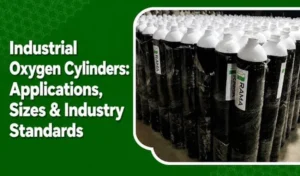
Choosing an industrial oxygen cylinder is not simply about picking a cylinder by size. The right specification depends on the application, required oxygen supply, filling pressure, material and applicable standards. Oxygen cylinders are used across steel manufacturing, food and beverage, laboratories, aviation, healthcare and several other industries, so the cylinder specification needs to match the actual operating requirement.
What Are Industrial Oxygen Cylinders?
An oxygen cylinder is a pressure vessel designed to store and supply compressed oxygen. Industrial oxygen cylinders are selected for processes where oxygen is required as part of manufacturing, cutting, processing, testing, or other industrial operations.
Medical oxygen cylinders serve healthcare applications and may have different requirements for cleanliness, valve configuration, filling procedures, and applicable medical-gas regulations.
The cylinder itself does not produce oxygen. It stores compressed oxygen and allows it to be supplied safely through the appropriate valve and equipment.
Where Are Industrial Oxygen Cylinders Used?
Oxygen has applications across a wide range of industries. The required cylinder specification can vary depending on how the gas is being used.
Steel & Metal Processing
Oxygen is used in steelmaking, oxy-fuel cutting, and other high-temperature metal-processing applications. Reliable oxygen supply is important for processes where controlled combustion or oxidation is required.
Food & Beverage
Oxygen cylinders can be used in selected food and beverage applications, including packaging, fermentation, water treatment, and aquaculture.
Laboratories & Scientific Research
Laboratories may require a controlled oxygen supply for testing, research, and specific scientific processes.
Chemical & Petrochemical Industries
Oxygen can be used as a process gas in selected chemical and industrial operations.
Aviation & Emergency Oxygen
Stored oxygen is used in certain aviation and emergency oxygen systems where a portable or contained supply is required.
Healthcare
Medical oxygen cylinders are used in hospitals and healthcare settings for oxygen supply and patient-care applications.
What Oxygen Cylinder Sizes and Pressure Ratings Are Available?
Cylinder capacity and filling pressure are two different specifications, and both should be considered before selecting an oxygen gas cylinder.
Rama Cylinders’ published medical and oxygen cylinder specifications include:
| Specification | Rama Cylinders |
| Capacity range | 3 L to 220 L |
| Filling pressure | 150 bar to 300 bar |
| Materials | Manganese steel & chromium-molybdenum steel |
A larger cylinder is not automatically the right choice. Buyers should consider:
- Required oxygen quantity
- Filling pressure
- Application
- Portability and installation
- Refilling frequency
- Storage requirements
- Applicable standards and transport requirements
The actual requirement should be discussed with the manufacturer before finalising the cylinder specification.
Which Materials Are Used in High-Pressure Oxygen Gas Cylinders?
High-pressure oxygen cylinders require materials with suitable mechanical properties for pressure-vessel service.
Manganese Steel
Manganese steel is used in the manufacture of seamless high-pressure gas cylinders where strength and durability are important considerations.
Chromium-Molybdenum Steel
Chromium-molybdenum steel, commonly known as Cr-Mo steel, is used in demanding high-pressure cylinder applications because of its engineered mechanical properties.
Material selection should always correspond with the cylinder design, manufacturing process, and applicable standard rather than being made on material name alone.
Which Standards Apply to Industrial and Medical Oxygen Cylinders?
Cylinder standards help establish requirements related to areas such as design, manufacturing, inspection, testing, and conformity. The applicable standard depends on the cylinder design, intended application, and market.
Standards and compliance frameworks appearing in Rama Cylinders’ published technical information include:
- IS 7285
- ISO 9809-1
- DOT-3AA
- TPED/PED-related requirements, where applicable
Not every cylinder is automatically covered by every standard. Buyers should confirm the applicable specification, testing and documentation required for their particular application and destination market.
How Should Industrial Oxygen Cylinders Be Handled and Stored Safely?
Oxygen cylinders also require appropriate oxygen-service handling. Storage areas should be secure and well ventilated, cylinders should be protected from toppling, and equipment used with oxygen should be suitable for oxygen service. Oils, grease, and unsuitable lubricants should not be used on oxygen equipment.
What Should You Check Before Choosing an Oxygen Cylinder Supplier?
Before placing an order with an oxygen cylinder manufacturer or supplier, check the following:
- Required cylinder capacity
- Filling or working pressure
- Cylinder material
- Intended application
- Applicable manufacturing standard
- Valve and accessory configuration
- Testing and inspection requirements
- Quality and traceability documentation
- Production and customisation capability
- Domestic or export requirements
A supplier should be able to understand the application and provide a cylinder specification that matches the technical requirement.
Why Choose Rama Cylinders for Industrial and Medical Oxygen Cylinders?
Rama Cylinders has more than 20 years of manufacturing experience in gas cylinders and supplies cylinders for domestic as well as international markets.
For its published medical and oxygen cylinder range, Rama specifies capacities from 3 L to 220 L, with filling pressures from 150 bar to 300 bar. The cylinders are manufactured using manganese steel and chromium-molybdenum steel, with specifications tailored to customer requirements.
Rama also states that its cylinders are supplied to markets across North and South America, Europe, Africa, the Middle East, and Asia.
If you are looking for an industrial oxygen cylinder supplier, share your required capacity, pressure rating, quantity, application and applicable standard with Rama Cylinders to discuss the appropriate specification.
Explore Rama Cylinders’ Medical & Oxygen Gas Cylinders
Frequently Asked Questions
Q1. What sizes are available for industrial oxygen cylinders?
Answer: Rama Cylinders’ published medical and oxygen cylinder range covers 3 L to 220 L. Exact availability depends on the required specification and application.
Q2. What is the difference between an industrial oxygen cylinder and a medical oxygen cylinder?
Answer: The main differences relate to the intended application and the associated specification, cleanliness requirements, valve configuration and applicable regulatory requirements.
Q3. What filling pressure is available for oxygen gas cylinders?
Answer: The filling pressure depends on the cylinder design and applicable specification. Rama Cylinders’ published medical and oxygen cylinder information specifies a filling-pressure range of 150–300 bar.
Q4. How do I choose an oxygen cylinder manufacturer?
Answer: Compare the manufacturer’s capacity range, pressure ratings, materials, applicable standards, testing procedures, documentation, production capability and ability to meet your application-specific requirements.

Amit V. Ramsinghani
Amit V. Ramsinghani serves as the Executive Director of Rama Cylinders, overseeing daily operations since the company's inception in 2005. He holds a Bachelor of Science in Business Administration from Babson College in Boston, USA. Under his leadership, the company has strategically entered new markets, developed superior products, and secured significant global and Indian tenders.