Whether supplying medical oxygen, powering welding equipment, or transporting industrial gases across borders, two cylinders, ISO and DOT cylinders, can seamlessly handle these tasks. Yet, many businesses are unaware of their standards and permitted uses. Understanding these differences is crucial to help you choose the right one with confidence.
A] What Are ISO Cylinders?
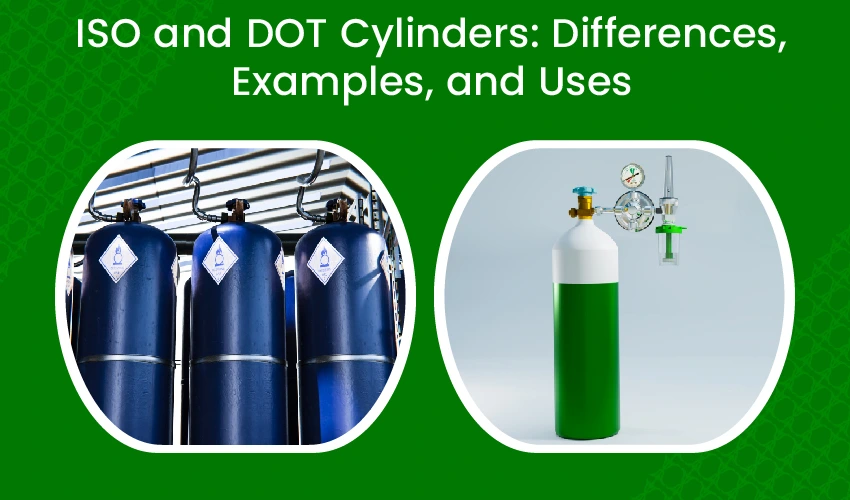
ISO cylinders are specialised gas cylinders designed to meet the standards set by the ISO (International Organisation for Standardisation), be it design, manufacture, testing, or use. It makes the cylinders robust and safe for a range of uses globally. For example, global shipping, international gas transport, and industrial applications require ISO-certified gas cylinders. Similarly, ISO gas cylinders are used in industrial, medical, and individual applications to store and transport compressed gases worldwide, excluding the United States.
Looking for reliable, nationally and internationally tested hydrogen cylinders at cost-effective rates?
B] What Are DOT Cylinders?
DOT (Department of Transport) cylinders are specialised cylinders regulated by DOT and used only in the U.S. market. The DOT cylinders are periodically tested for safety, robustness, durability, and high-pressure withstanding capacity to meet the strictest standards of DOT. These specialised gas cylinders are widely used to store and transport medical gases, food-grade gases, and industrial gases safely in the United States. Among the types of DOT cylinders, the DOT-3AA type is widely preferred due to its robust safety measures and material used (steel).
C] ISO vs DOT Cylinders: Key Differences
1. Regulatory Standards
ISO standards regulate the high-pressure vessels through its strictest guidelines globally (excluding the US). ISO monitors manufacturing, testing, material compatibility, and design of the vessels to meet the global safety benchmarks. Through mandating the implementation of standards, the authority ensures safe storage and transport of potentially flammable gases. With ISO certification, the cylinder can be used worldwide without the need for recertification in a particular country.
When exploring the difference between ISO and DOT cylinders for regulatory standards, DOT also regulates high-pressure gas cylinders through its guidelines within the United States. It covers design, construction, and maintenance to ensure the safe storage and transportation of high-pressure compressed gases.
2. Design and Construction
ISO gas cylinders usually follow the standardised manufacturing processes. They are often made up of high-strength steel to achieve mechanical properties for global applications. The pressure-withstanding limit in these cylinders is 1.5 times greater than their service pressure. They usually have thinner walls compared to DOT gas cylinders.
DOT cylinders, on the other hand, are capable of withstanding twice the hydraulic pressure of the normal service pressure range. The design parameters may vary depending on the type of gas, required pressure range, and application. Valve systems and safety relief devices are also tailored based on the requirements.
3. Capacity and Pressure Ratings
ISO cylinders are commonly categorised in dimensions and pressure capabilities to support high-pressure industrial gases used in export scenarios. The capacity and pressure rating are optimised for shipping efficiency, aligning the ISO cylinders with international configurations. They are commonly used to store and transport gases like nitrogen, hydrogen, and other industrial gases.
DOT cylinders’ capacity and pressure specifications usually vary and are determined by industry and gas type. For example, DOT cylinders used for medical oxygen may differ from those used for welding.
4. Applications and Usage
ISO cylinders are widely used in industries like manufacturing, oil and gas, aerospace, and electronics. They are best suited for applications where standardisation and interoperability are required.
DOT cylinders are more commonly used in medical oxygen tanks, portable welding gas cylinders, fire extinguishers, beverage carbonation, automotive repair, and commercial installations. These cylinders are the most preferred choice for most US-based commercial operations.
5. Labelling and Certification
ISO cylinders have internationally recognised markings, including cylinder type, working pressure, test pressure, and material specification. These markings ensure easy acceptance worldwide.
DOT cylinders carry US-specific markings, including DOT classification, manufacturer information, service pressure, and periodic inspection dates. These markings ensure safety compliance within US jurisdictions.
D] Choosing the Right Cylinder for Your Needs
To select the right cylinder, first identify the intended use, whether it will be used for industrial, medical, or international transport. If the cylinder is to move across countries, ISO gas cylinders should be considered, as they have a global permit. For operations within the United States, DOT gas cylinders are more suitable, as they meet domestic regulations. Moreover, consider steel-made gas cylinders for robustness, and choose only a certified supplier, like Rama Cylinders, a reliable ISO and DOT cylinder manufacturer.
Looking for reliable, nationally and internationally tested hydrogen cylinders at cost-effective rates?
Conclusion
In conclusion, we saw that each gas cylinder is engineered for different regions; one is for global use and another one for US use. When selecting between two, choose ISO for global transportation and industrial use, while choosing DOT cylinders for domestic use markets is advised.
Rama Cylinders is a trusted and renowned CNG cylinder manufacturer in India. We have sold over 7 million compressed gas cylinders worldwide, including ISO and DOT gas cylinders. If you are looking for these types of cylinders (ISO and DOT gas cylinders), contact us now!
FAQs
The main difference between ISO and DOT cylinders is permission to use them in different regions. Moreover, the design, robustness, and safety measures also differ due to distinct regulatory guidelines for ISO and DOT cylinders.
Both ISO and DOT cylinders undergo rigorous testing procedures, which makes them the safest gas cylinders for various industrial, medical, and other uses. However, a certified manufacturer also plays a crucial role in making the cylinders extremely secure.
Yes, ISO cylinders can be used in the United States, but they must comply with ISO and DOT guidelines at the same time to be used within the United States.
ISO cylinders are made to meet the strictest guidelines of ISO, and they are internationally accepted. Both features help gas companies to facilitate their international trades while ensuring safety.
The automotive industry, pharmaceutical and medical industries, machine and systems construction, the printing industry, industrial automation, and manufacturing prefer ISO cylinders.
A wide range of gases, including oxygen, nitrogen, argon, helium, hydrogen, and nitrous oxide, can be stored in ISO and DOT cylinders. Both cylinders are capable of storing and transporting these gases safely.

Amit V. Ramsinghani
Amit V. Ramsinghani serves as the Executive Director of Rama Cylinders, overseeing daily operations since the company's inception in 2005. He holds a Bachelor of Science in Business Administration from Babson College in Boston, USA. Under his leadership, the company has strategically entered new markets, developed superior products, and secured significant global and Indian tenders.